It's been a bit since we’ve had any updates on our transition to a fully zero-emission bus fleet. However, this fall, MTS took several steps toward its goal to have a fully zero-emission fleet by 2040. Read on to hear where we stand today with our Zero-Emission Bus (ZEB) program, and where we’re headed next.
How It Started
Our work toward zero-emission buses began back in 2017, when the MTS Board of Directors approved a multi-year ZEB Pilot Program. That pilot helped us test electric bus technology in real-world conditions across our service area and better understand what it would take to transition our entire bus fleet. Building on those results, the MTS Board approved a full Zero-Emission Bus Transition Plan in September 2020, setting a clear path to a 100% zero-emission bus fleet by 2040 to meet state goal.
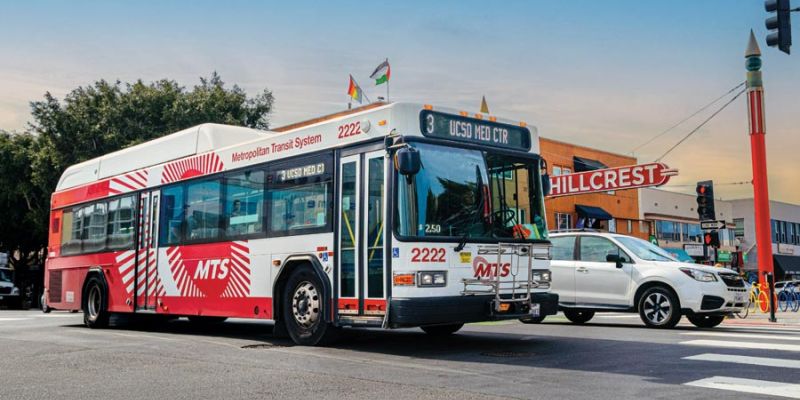
Even today, MTS already operates one of the cleanest fleets in the country. All of our 40- and 60-foot buses run on compressed natural gas (diesel fueled buses were fully phased out of service in 2021). We also operate 168 zero-emission light rail vehicles. The move to battery-electric buses is the next big step in reducing emissions even further.
Where We Are Today
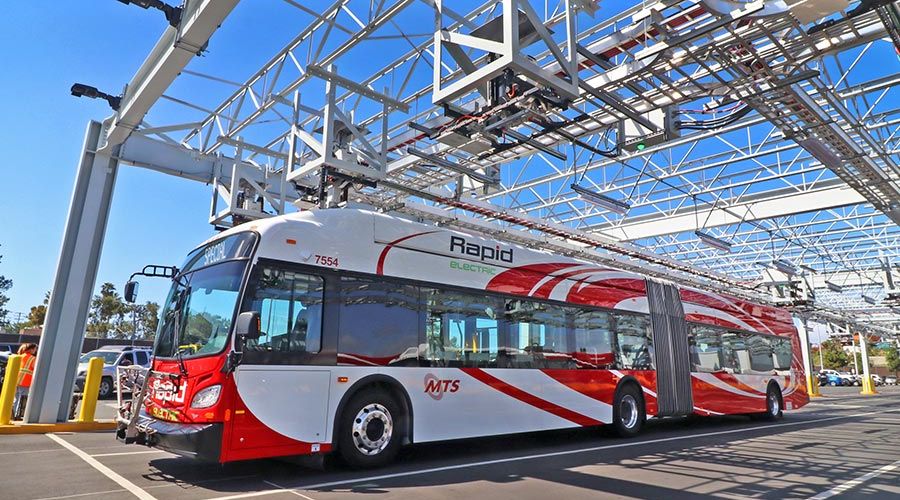
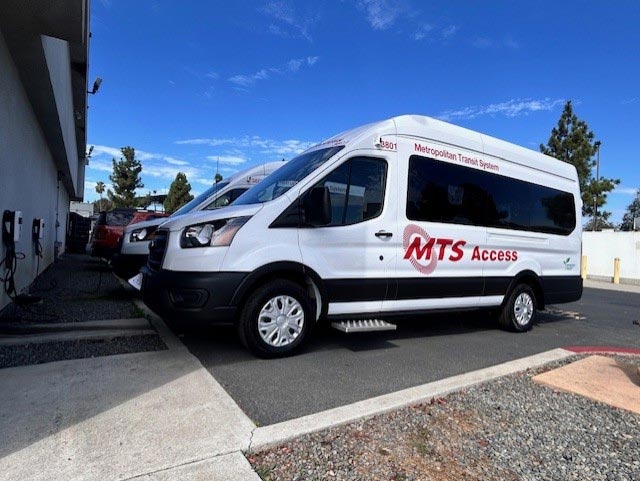
Right now, MTS has 40 battery-electric buses in service, 13 of which were delivered and went into service in fall 2025, along with the first-ever battery-electric paratransit vehicles in our fleet (two). These buses are operating across multiple divisions, with most currently running in the South Bay, where charging infrastructure is most established. As part of the program, electric buses rotate between routes, giving more riders the chance to experience them while our teams monitor performance across different terrains, distances and conditions.
Behind the scenes, we’re also expanding the infrastructure needed to support these buses. In September, we broke ground on a new overhead charging structure at our Imperial Avenue Division. This structure will have space for charging 30 electric vehicles at a time and will be expandable up to 10 additional charging positions. We also recently completed design work for 38 additional overhead charging positions at our Kearny Mesa Division—an important step toward expanding electric service in more parts of the region.
Charging infrastructure is the backbone of the zero-emission transition. These projects are happening now with the 2040 full transition target in mind. Implementing electric vehicle technology can be expensive, and we’re thankful for our state and federal officials who helped make much of this work possible through a combination of grant and rebate funding. As charging capacity grows at more divisions, our electric bus fleet will be able to grow alongside it. Bringing zero-emission service to more routes and neighborhoods across San Diego County.
What’s Next
Looking ahead, our focus is on completing the next phases of charging infrastructure at Imperial Avenue and Kearny Mesa and continuing to expand our electric fleet. In 2026, we plan to purchase approximately 20 more battery-electric buses and continue working with state and federal partners to secure funding that keeps this transition moving forward without reducing the quality or reliability of service our riders expect.
The transition to zero-emission buses is a large undertaking, and progress happens step-by-step. Every new charger installed and every electric bus added brings us closer to a cleaner, quieter transit system for the region. We’re proud of how far we’ve come and we’re excited to keep moving forward with our riders and communities along for the ride.