When we talk to riders about what's on their mind when it comes to our service, a lot of topics come up. Frequency levels. Getting more service in their community on the weekends or later at night. Safety and security. And, oftentimes too, homelessness seen onboard and at stations.
Discussing homelessness on transit systems can be a complicated topic. Here at MTS, it's been a focal point for our Safety and Security Department. In recent years, we've aimed to take a more proactive, people-first approach to addressing homelessness through our Homeless Outreach Team (HOT). Rather than relying solely on enforcement, MTS focuses on connection, and helping individuals access the support they need while keeping the system safe and welcoming for everyone.
From Humble Beginnings to Regional Collaboration
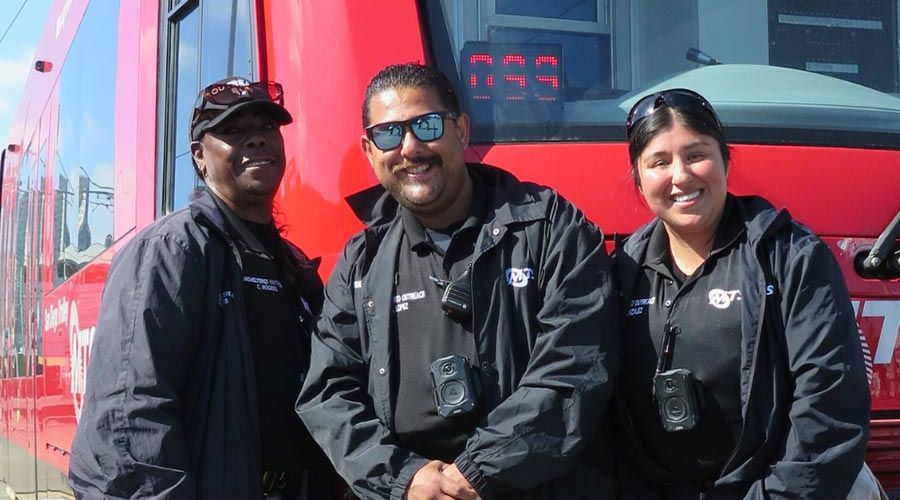
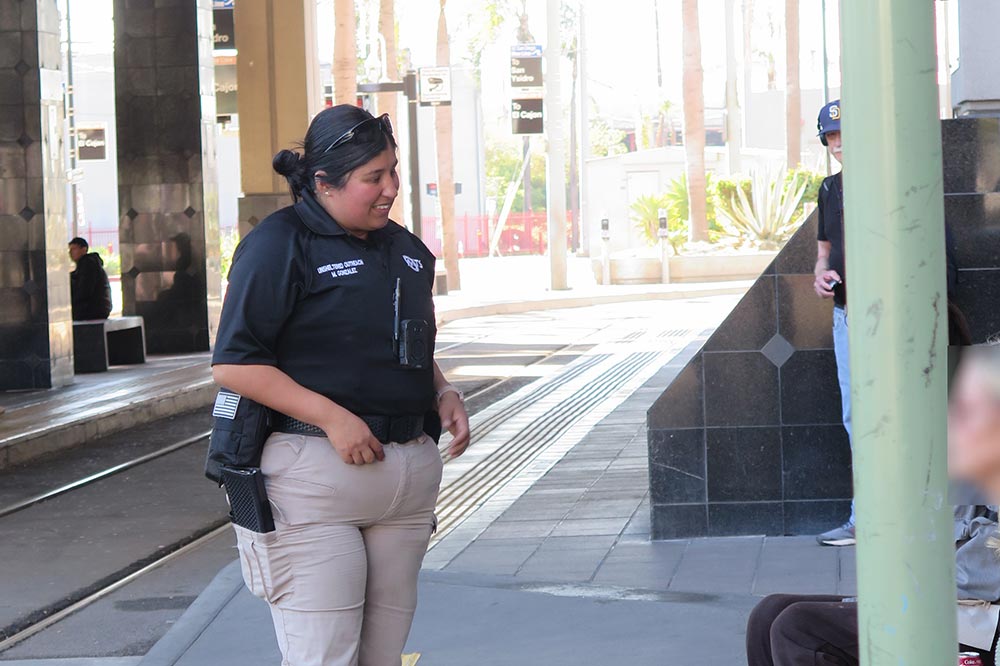
MTS’s first HOT team started in 2021 with former Code Compliance Supervisor Miguel Gonzalez and Code Compliance Inspector Cynthia Rogers. The HOT program was created to address situations involving individuals experiencing homelessness on the transit system, with an aim to also help improve the rider experience.
The program started small, partnering closely with Downtown San Diego Partnership’s Clean & Safe Unhoused Care Team, connecting transit riders to critical resources. Early collaborations then expanded to a few more service providers (National City’s Homeless Services Coordinator, San Diego Rescue Mission and the Regional Task Force on Homelessness), laying the groundwork for the team’s growth.
“Our goal is to connect individuals with outreach agencies that have available resources, while also helping maintain a safe and comfortable environment for both riders and employees,” says Supervisor Veronica Iniguez.
These early partnerships helped the team engage directly in communities across San Diego, from downtown to south county neighborhoods, and also included a focus on specialized programs like the Veterans Affairs Mobile Medical Unit, launched in June 2024, to bring healthcare and housing resources to veterans experiencing homelessness.
Building a Network That Works
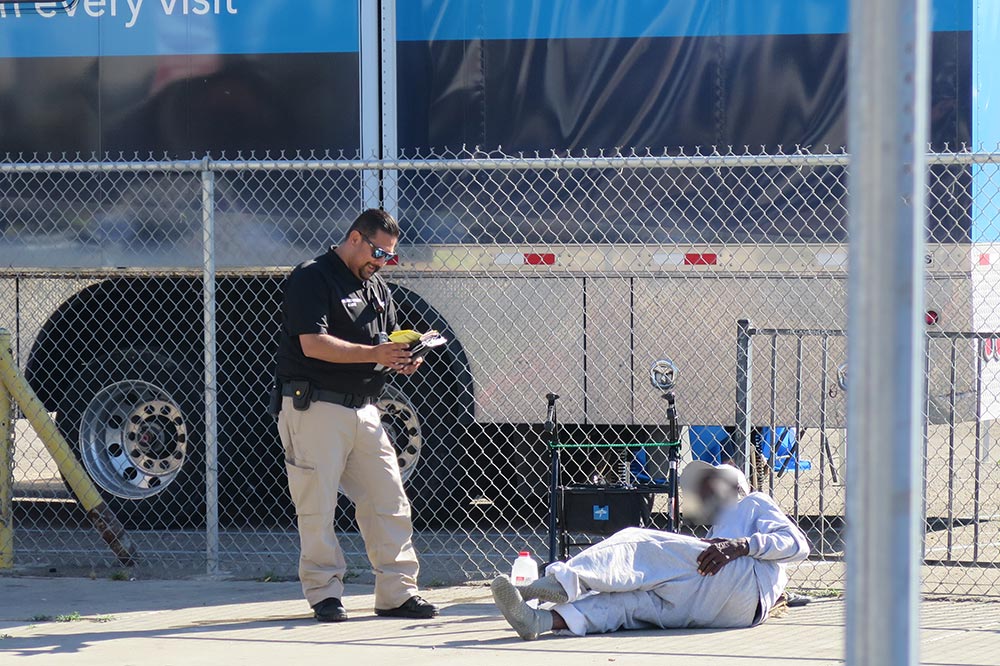
Today, the HOT has grown to three members, offering services seven days a week. The team now operates internally, allowing them to respond quickly, coordinate with transit staff and maintain a consistent presence across stations and vehicles.
However, they maintain active collaborations with more than 30 outreach service providers, including Alpha Project, Father Joe’s Villages, the Salvation Army, NAMI, San Diego Rescue Mission and Veterans Village of San Diego. These relationships allow for coordinated fieldwork, ride-alongs and direct referrals to ensure individuals receive the ongoing support they need.
The team also hosts and participates in multi-agency C.A.R.E.S. events on transit property, where people can access medical care, social services, housing assistance, hygiene kits, transportation, legal support, and benefits programs, all in one location.
Since the start of 2026 alone, HOT has made 2,931 contacts with individuals experiencing homelessness, and connected 1,400 people to vital resources such as food, medical care and mental health support.
Meeting People Where They Are
Each day begins early, with the team starting outreach at 5 a.m. and traveling across the region. From major transit centers to neighborhood stops, HOT meets people where they are and works to understand their immediate needs. They collaborate with local outreach organizations and ride alongside service providers.
Between January and March 2026, the team conducted 81 shelter assessments, placed 27 people in safe housing and helped reunite four families.
Their work goes beyond shelter, however. In the same time period, HOT has distributed 238 clothing and snack kits, assisted 170 people with DMV-related needs and supported 19 health and human resource actions. These numbers continue to grow every day as the team builds trust, meets people where they are and ensures that help reaches those who need it most.
A More Human Approach
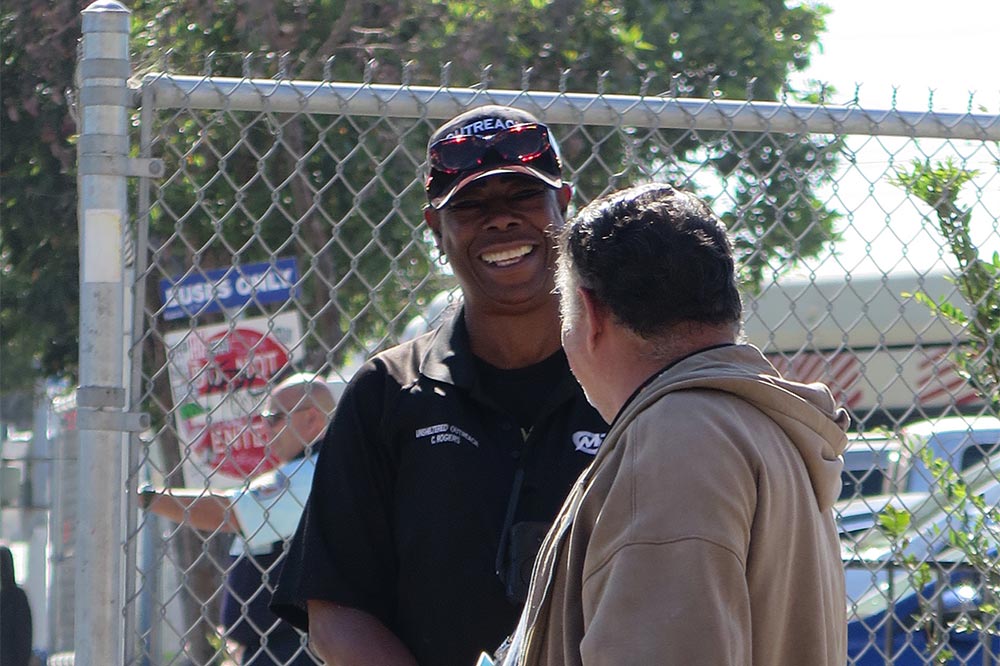
“You have to listen to a person to know what their needs and wants are,” says team member Cynthia Rogers. “If you listen, you know what to do.”
MTS has intentionally shaped the program to feel approachable and humane. One example is the team’s updated uniform. Shifting from Code Compliance Inspector yellow to black polos labeled “MTS Outreach” to reduce barriers and build trust.
“Working with the unsheltered is like planting a seed,” Rogers says. “You put the seed in the soil and you watch it grow.”
That philosophy reflects the reality that progress takes time. Many interactions start small, but they can lead to meaningful, long-term change.
Supporting the Whole System
The Homeless Outreach Team also supports bus and Trolley operators, who can call them directly when someone may need assistance. This allows situations to be handled through outreach instead of enforcement whenever possible, creating a safer, more welcoming environment for all riders.
As the program continues to grow, the focus remains on strengthening partnerships and expanding access to resources across the region—showing transit can be more than a way to get around; it can be part of the solution. Because sometimes, the most impactful step is simply showing up and choosing to help.